

By Sheila Porter, MA, NCC, LPC | Reviewed for Clinical Accuracy on May 3, 2026
Most couples sitting on my couch in Castle Rock think they’re here to learn how to talk more. They aren’t. They’re actually here to learn how to feel safe together again.
I’ve spent 25 years in my own marriage and over a decade in clinical practice. I know how fast a relationship can slide into the “roommate phase” (or worse, a cycle where every word feels like a trap). You aren’t failing because you fight; you’re just stuck in a biological loop that talk therapy usually can’t reach.
Key Takeaways
- Beyond Talk Therapy: Long-term success relies on nervous system co-regulation, not just communication skills.
- The Somatic Gap: Counseling helps partners bridge the physiological gap where “logic” fails during high-stress triggers.
- Neuro-Biological Tools: Advanced interventions like EMDR and SSP address deep-rooted relational trauma that traditional methods miss.
- Proactive Resilience: Maintenance-style therapy prevents systemic resentment and fosters generational emotional health.
- The Repair Metric: The health of a bond is measured by the speed of repair, not the absence of conflict.
Why “Communication Skills” Often Fail: The Somatic Gap
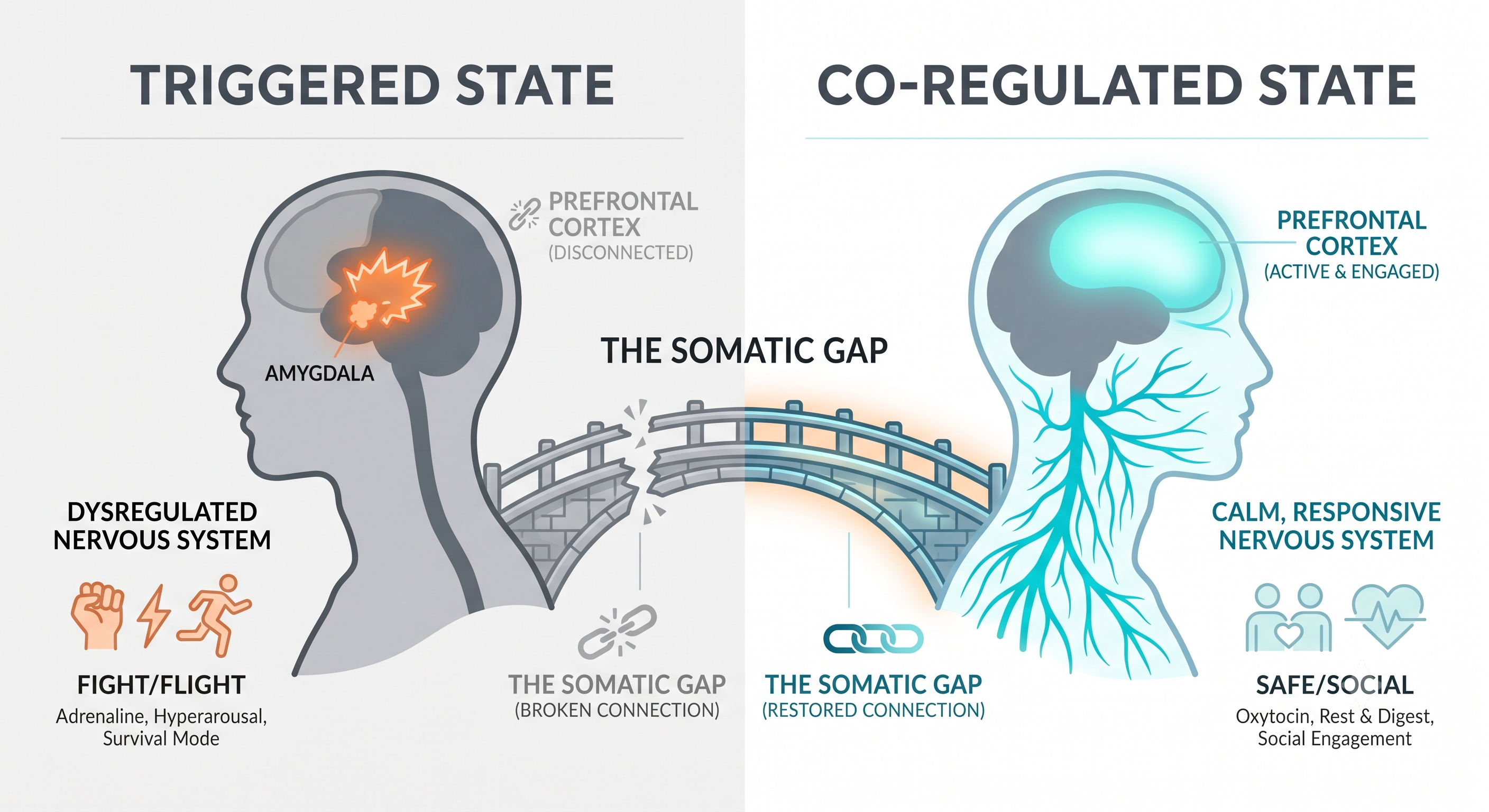
We’ve all heard the advice to use “I-statements.” But have you noticed those tools vanish the moment you’re actually upset?
Communication skills usually fail when you’re triggered because your nervous system has taken the wheel, effectively disabling the part of the brain responsible for logical speech.
I call this the “Somatic Gap.” When your brain senses a threat, even just a sharp tone of voice or a certain look in your partner’s eye it flips a switch. Your amygdala sends a 911 signal to your body. Instantly, your heart rate climbs, your muscles tighten, and your “social engagement system” goes offline.
In that state, you aren’t “bad at talking.” You are biologically unable to listen. This is why you find yourselves having the same argument over and over again for a decade. Counseling helps you bridge this gap. We teach you to catch those physical spikes before they turn into a blowup, moving the work from the “thinking brain” down into the “feeling body.”
5 Real Benefits of Staying Proactive in Therapy
Most people wait for a crisis to call a therapist. They wait until the suitcase is packed or the lawyer has been called. However, the American Psychological Association (APA) shows that the couples who thrive are the ones who do the work while they still have the emotional energy to invest.
The biggest benefits of therapy come from the steady upkeep of the bond, long before it reaches a breaking point.
1. Better Co-Regulation
You learn to be a safe place for your partner. This isn’t just about being “nice.” It’s about learning to use your own calm nervous system to settle theirs. When one partner can remain grounded while the other is spinning, the entire baseline of anxiety in the home drops.
2. Settled Triggers and “Emotional Unpacking”
We all bring ghosts into our marriages—unresolved hurts from childhood or past relationships. In therapy, we use specific steps to take the “sting” out of these old wounds. When you settle those triggers, you stop reacting to the past and start responding to the person standing in front of you today.
3. Actual Physical Health and Longevity
High-conflict living is physically exhausting. It spikes your cortisol and keeps your body in a state of low-grade inflammation. NIH studies suggest that healing your marriage can actually help your immune system and cardiovascular health. Longevity isn’t just about how long you live, but the quality of the life you share.
4. Real Intimacy Beyond the “Surface”
This is about moving past “how was your day” or “who is picking up the kids.” Real intimacy is the space where you feel truly seen and heard. By creating a dedicated hour each week to explore your inner worlds, you build a “relational bank account” that helps you weather future storms.
5. A Map for Your Kids
You are the primary model for your children’s future relationships. By attending counseling, you’re showing them how to handle hard feelings without breaking the connection. You’re teaching them that it’s okay to be vulnerable and that “repair” is always possible.
| Feature | Standard Talk Therapy | Our Neuro-Biological Approach |
| Main Focus | Talking & Advice | Regulating the Nervous System |
| Tools Used | Lists & Homework | EMDR, Brainspotting, SSP |
| The Goal | Solving today’s fight | Changing how you react to stress |
| Result | Short-term peace | A steady, resilient life together |
The Science of Connection: How Your Bodies Talk to Each Other
We talk a lot about “Co-Regulation” in trauma-informed care. This is just a fancy way of saying one person’s calm helps the other person settle down. It’s a biological dance that happens beneath the level of words.
Relationship health isn’t about never fighting. It’s about how fast you can find your way back to each other afterward.
When you understand Polyvagal Theory, you realize that defensiveness is just a survival trick. Your partner isn’t “being difficult” on purpose; their nervous system has moved into a “ventral vagal” state of shutdown or a “sympathetic” state of fight.
Once you stop judging and start being curious about why your body feels unsafe, the whole energy of the house changes. You stop being adversaries and start being teammates against the “reactive cycle.” If your heart starts racing before you even open your mouth, your body is just trying to protect you. [We invite you to see how our trauma-informed approach can help].
Every long-term relationship goes through predictable transitions that can strain the bond. These aren’t signs of failure; they are signs of growth.
- The Transition to Parenthood: When the focus shifts from “us” to the baby, the primary attachment can feel neglected. Counseling helps you find your way back to being partners, not just co-parents.
- The “Roommate” Phase: Years of routine can lead to a sense of “numbness.” We help you reignite the curiosity that made the relationship feel alive in the beginning.
- Recovering from Betrayal: Whether it’s infidelity or a breach of financial trust, betrayal creates a deep “attachment wound.” We don’t just “get over it”—we use EMDR to process the trauma and rebuild the foundation from the ground up.
- The Empty Nest: When the children leave, many couples look at each other and realize they don’t know the person across the table anymore. This is a season for “re-discovery.”
Healing the Triggers You Can’t Just “Talk” Away
Sometimes, no matter how much you talk, the problem doesn’t budge. You’ve had the same conversation a hundred times, and yet, the moment the topic comes up, you both explode or shut down. This usually means there is some “stored” hurt or old betrayal trauma that needs to be cleared out of the body’s memory.
By going deeper than traditional talk, we can fix the internal alarms that keep you stuck in the same painful loops.
EMDR and Brainspotting for Couples
At Lifetouch, we use EMDR and Brainspotting to help you process the individual hurts that are bleeding into your marriage. Maybe a past rejection from a parent makes you hyper-sensitive to your partner’s need for space. EMDRIA explains that this helps your brain move from a state of “on edge” to a state of peace. You stop reacting to the old ghost and start responding to the present moment.
The Safe and Sound Protocol (SSP)
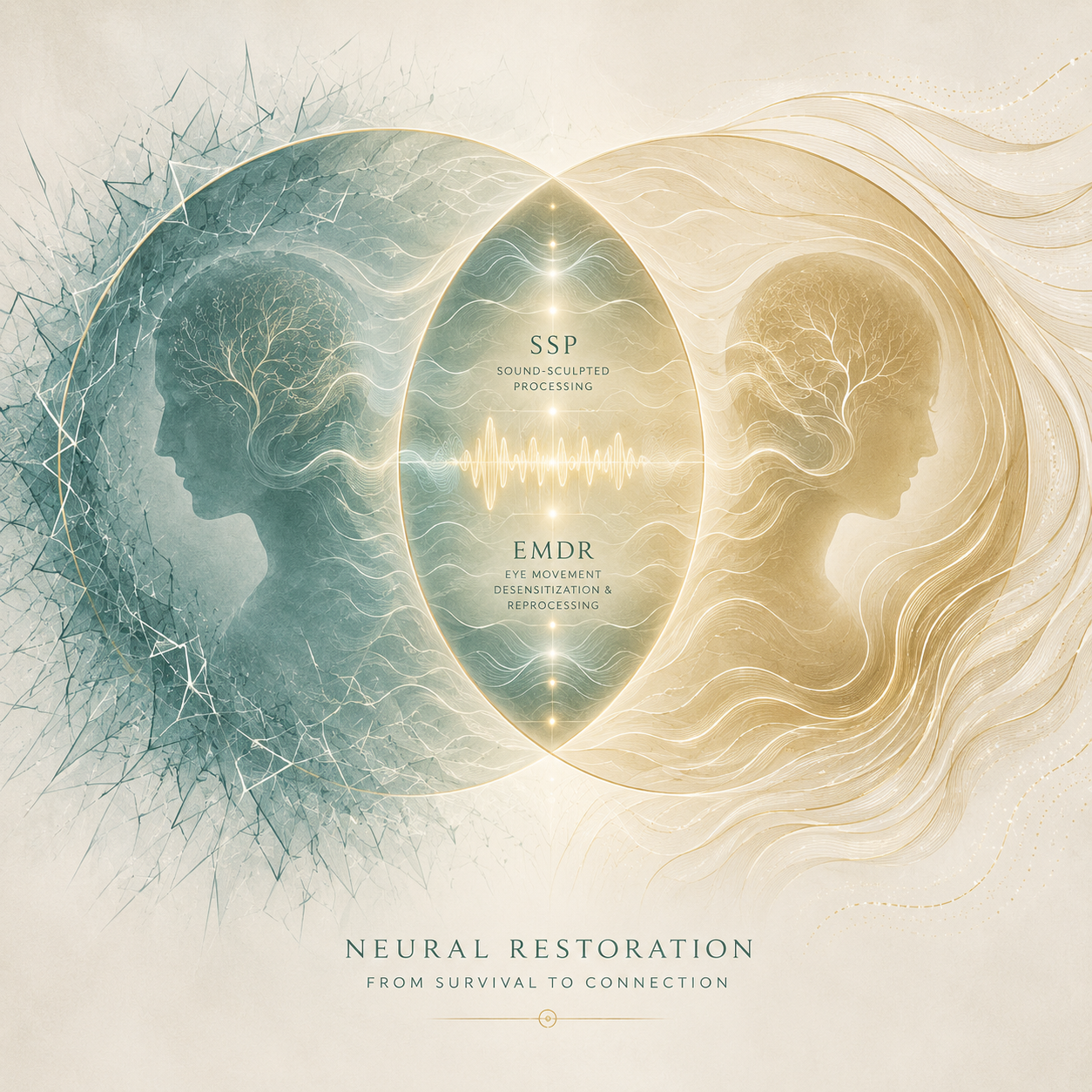
We also use the Safe and Sound Protocol (SSP). Clinical research shows this music-based tool retrains your nervous system to listen for safety instead of threat. It “tunes” the middle ear to better hear the prosody—the warmth and melody—in your partner’s voice. When you can literally hear safety, your body stops bracing for impact.
[Learn more about using the Safe and Sound Protocol to restore your connection].
The Roadmap: What to Expect in Couples Counseling
I know that starting therapy can feel overwhelming. You might worry that the therapist will take sides or that you’ll just spend an hour “venting” without making progress. Here is how we do things differently at Lifetouch:
- The Assessment Phase: We spend the first few sessions understanding your “relational dance.” We look at your histories, your triggers, and the “loops” you get stuck in.
- Stabilization: We give you immediate tools to handle “flooding.” We want you to leave the office feeling more regulated than when you walked in.
- Deep Processing: Once you feel safe, we go after the “roots.” This is where we use EMDR or Brainspotting to clear the old emotional debt.
- Integration: We help you build new patterns of connection. This is where you learn to co-regulate and build a “shared meaning” for your future.
Is It Worth the Effort? Moving from “911” to Maintenance
I see plenty of couples who think they are too far gone. They feel like the “tender places” have been replaced by scar tissue. But usually, even under all that hurt, there’s a part of you that still wants to be found.
Think of counseling like an oil change. It’s much easier to keep things running smooth than it is to fix an engine that’s already seized on the highway.
- Does it last? Yes. Because we are changing how your brain reacts (not just teaching you tips), the changes tend to stick. You aren’t just “behaving” better; you’re feeling safer.
- What if they won’t go? You can still work on your own nervous system. Relationships are like a mobile—if you move one piece, the whole thing has to shift. When you stop being “triggerable,” the old arguments often lose their power.
- What if we’re already in crisis? Then we start with stabilization. We help you find a bit of solid ground so you can finally catch your breath and see a way forward.
Your Journey at Lifetouch Counseling in Castle Rock
Our Castle Rock office is a sanctuary. It’s a place where you can finally stop performing and just be honest about what’s hard. We don’t do “shame,” and we don’t do “judgment.” We are curious and connected.
Whether you’re recovering from a breach of trust or just want to make sure your life together stays fulfilling, we’re here to help you find the way back to each other. You don’t have to carry the load alone.
Don’t wait until the “engine light” starts flashing. Book a Consultation with our Castle Rock team today.
About the Author
Sheila Porter, MA, NCC, LPC, founded Lifetouch Counseling to give people a different kind of help. With 25 years of marriage and over a decade of clinical experience, she focuses on “bottom-up” healing—using neuro-biological tools to help couples move from survival mode back into a life of real, lasting connection. Learn more about Sheila’s path and credentials here.
Medical Disclaimer: This is for information only. It isn’t a substitute for professional medical advice or treatment. Always talk to a qualified health provider about your specific situation.
Crisis Support: If you’re in immediate danger, please reach out:
- 988: Suicide & Crisis Lifeline
- 911: Emergency Services
- Text HOME to 741741: Crisis Text Line
Recent Comments