
EMDR + Faith Healing at a Glance
- EMDR is a clinically proven trauma therapy recognized by leading organizations like the World Health Organization and American Psychological Association
- It can be safely integrated into Christian counseling without conflicting with your faith
- Trauma is not just spiritual, it is also stored in the brain and nervous system
- Unprocessed trauma often impacts communication, conflict, and emotional safety in marriage
- Prayer and therapy can work together to support deeper, more complete healing
- EMDR helps reduce triggers and allows you to respond calmly instead of reacting from past pain
- Many couples experience improved connection, trust, and emotional safety through trauma-informed care
- You don’t have to choose between your faith and getting real help you can have both
What Is EMDR in Christian Counseling?
EMDR (Eye Movement Desensitization and Reprocessing) is a clinically proven trauma therapy that can be integrated into Christian counseling to help process painful memories while honoring your faith.
If you’ve ever wondered whether therapy can truly align with your beliefs, you’re not alone. Many people carry a quiet question: “Will I have to leave part of my faith at the door?”
The answer is no.
Christian counseling that includes EMDR creates space for both emotional healing and spiritual connection, without forcing you to choose between them.
In practice, many clients describe a sense of relief when they realize therapy isn’t replacing their faith, it’s supporting it. That shift alone can make starting feel less overwhelming.
According to the World Health Organization, EMDR is considered a first-line treatment for trauma, and the American Psychological Association includes it among the most strongly recommended therapies for PTSD.
Mini-FAQ
Is EMDR just talk therapy?
No. EMDR works with how the brain and nervous system store trauma, not just conversation.
Can faith be included in EMDR sessions?
Yes. Faith can be integrated at your comfort level, never forced.
If you’re exploring EMDR as part of your healing, you can learn more here
Is EMDR Biblical or “New Age”?
EMDR is not a spiritual practice, it is a clinical tool that supports how the brain processes and heals from trauma, which can align with biblical themes like renewing the mind.
This is one of the most common concerns for Christians exploring therapy, and it makes sense. You want to protect your beliefs. You don’t want to unknowingly step into something that feels misaligned.
But EMDR isn’t about spirituality, it’s about biology.
It works with the nervous system God designed, helping the brain reprocess experiences that feel “stuck.” Many people find comfort in connecting this with Romans 12:2, the renewal of the mind.
Research by Bessel van der Kolk shows that traumatic memories are stored differently in the brain, often remaining emotionally active rather than processed as past events.
This isn’t replacing faith. It’s supporting transformation in a practical, grounded way.
Mini-FAQ
Does EMDR conflict with Christianity?
No. When used within Christian counseling, it complements your faith.
Is EMDR spiritually safe?
Yes, when guided by a licensed, faith-integrated therapist.
Want a deeper understanding of how faith and therapy work together? Read: The Intersection of Faith & Mental Health: Professional Christian Counseling in Castle Rock
Why Prayer Alone Sometimes Doesn’t Heal Trauma
Prayer is powerful, but trauma is also stored in the body and nervous system, which often requires therapeutic support to fully process.
This can be a tender realization. You may have prayed deeply. Repeatedly. Faithfully. And still… something feels stuck. That doesn’t mean your faith is weak. It means your body is holding something in your mind and even your spirit hasn’t fully processed yet.
Think of it this way: prayer invites God into healing. Therapy helps your nervous system receive that healing. Both can work together, gently and effectively.
Many clients describe a sense of relief when they realize they don’t have to choose between spiritual practices and practical support. They can finally stop striving and start receiving help.
Research from the Harvard T.H. Chan School of Public Health, has found that regular engagement in faith practices is associated with lower rates of depression and greater overall life satisfaction.
Studies from the National Institutes of Health also suggest that spiritual coping can play a meaningful role in managing stress and emotional challenges.
If you’ve been carrying this alone, you don’t have to anymore
Mini-FAQ
Is prayer not enough?
Prayer is essential, but additional support can help address how trauma is stored in the body.
Does needing therapy mean weak faith?
No. It reflects how layered and human the healing process can be.
How Trauma Affects Christian Marriages
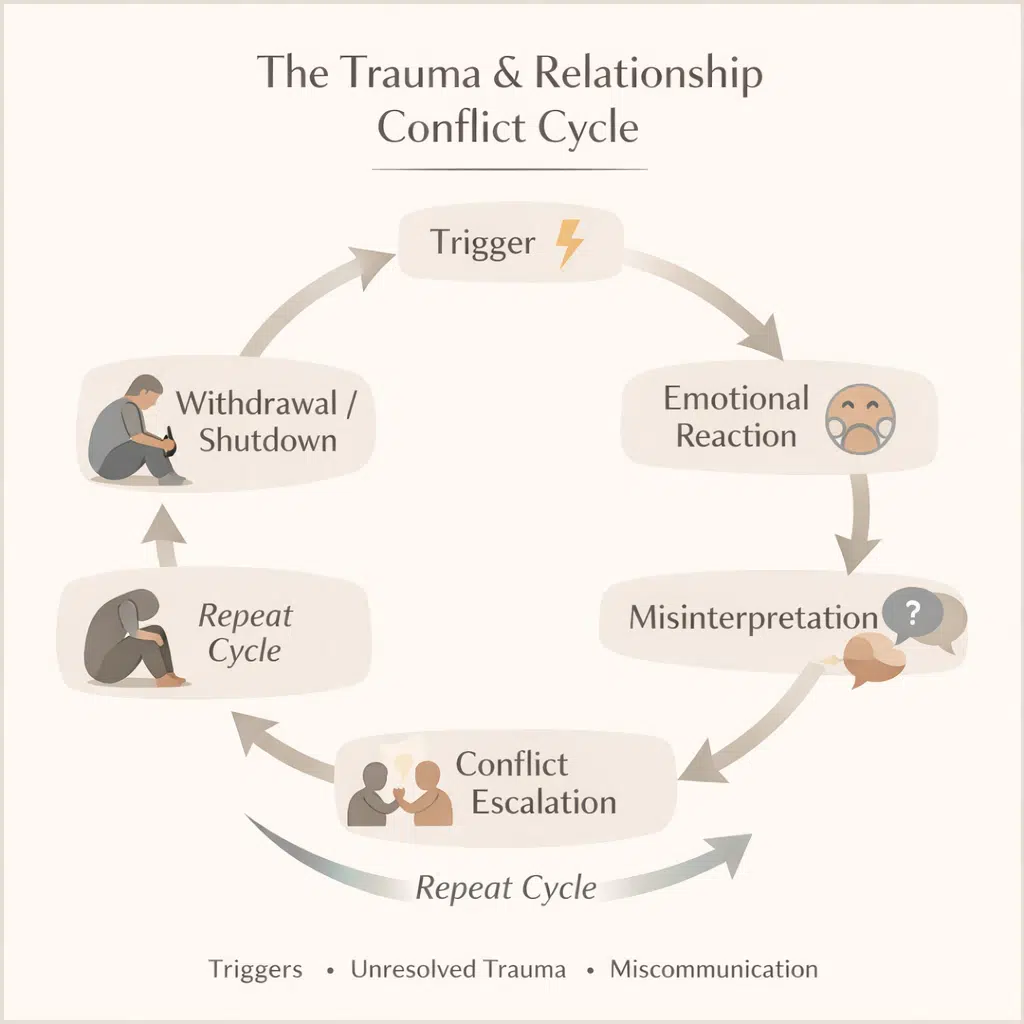
Unprocessed trauma can shape communication, emotional safety, and conflict patterns in marriage, often creating cycles couples can’t resolve on their own. Many couples come to believe they have a communication issue.
But underneath, something deeper is happening.
In practice, I often see couples stuck in the same argument, not because they don’t love each other, but because past wounds are quietly influencing present reactions.
Trauma can:
- Increase defensiveness
- Create emotional distance
- Trigger repeated conflict cycles
- Make safe conversations feel threatening
You might find yourselves asking:
- “Why do we keep having the same fight?”
- “Why does this feel bigger than it should?”
If that resonates, you’re not alone. And it doesn’t mean your relationship is broken. It often means something deeper needs care.
According to the Substance Abuse and Mental Health Services Administration , trauma can significantly affect emotional regulation, behavior, and relationship patterns if left unprocessed.
Mini-FAQ
Why do we keep repeating the same arguments?
Trauma patterns often drive repeated emotional cycles.
Is this a relationship issue or individual issue?
It’s often both, individual wounds can impact relational dynamics.
If this feels familiar, you can explore our christian counseling service to better understand these patterns.
The Hidden Link Between PTSD and Relationship Conflict.
PTSD and unresolved trauma can trigger fight, flight, or shutdown responses that partners often misinterpret as rejection, anger, or disconnection. This is where things can feel confusing and even painful.
One partner withdraws. The other pursues.
One shuts down. The other escalates.
It can feel deeply personal but often, it’s neurological. The nervous system is reacting to perceived threat, even when there isn’t one.
Research from the Centers for Disease Control and Prevention shows that cumulative exposure to trauma is linked to long-term mental health and relational challenges.
That’s why insight alone doesn’t always fix the problem. Healing requires addressing what’s happening underneath the surface.
Mini-FAQ
Can trauma cause overreactions?
Yes. It activates survival responses in the nervous system.
Can this cycle be broken?
Yes, with trauma-informed therapy like EMDR.
Learn how trauma-informed EMDR therapy works in depth
How EMDR Helps Heal Trauma at the Root
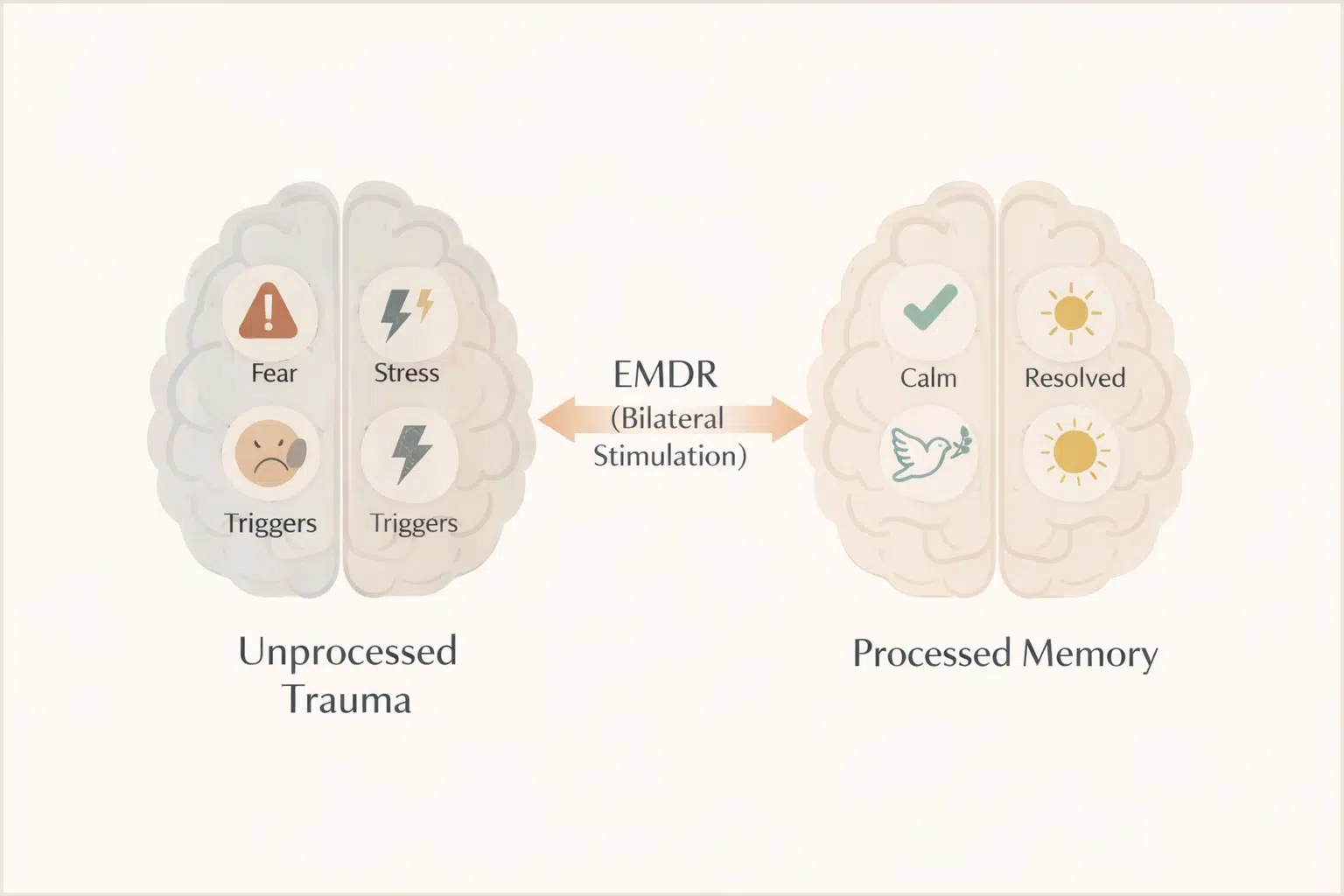
EMDR helps the brain reprocess traumatic memories so they lose emotional intensity, allowing individuals to respond rather than react.
Instead of reliving the past, EMDR helps your brain file it correctly, as something that happened, not something still happening.
This often leads to:
- Reduced triggers
- Greater emotional stability
- Increased sense of safety
Many clients describe it as finally feeling free from something that used to control them. That shift can impact not just the individual, but the entire relationship.
A meta-analysis published through the National Institutes of Health found that EMDR produces significant reductions in PTSD symptoms across multiple randomized controlled trials.
Mini-FAQ
Do I have to relive traumatic memories?
No. EMDR does not require detailed retelling.
Is EMDR effective?
Yes. It is widely recognized as an evidence-based trauma therapy.
Learn more about how EMDR therapy works
How Faith and EMDR Work Together in Therapy
Faith and EMDR work together by integrating your spiritual beliefs into a clinically grounded healing process that respects both your values and your nervous system.
You don’t have to compartmentalize your life here.
Your faith isn’t pushed aside.
It’s welcomed at your pace, in a way that feels safe.
This can look like:
- Prayer when desired
- Faith-informed reflection
- Exploring meaning through a biblical lens
At the same time, therapy provides tools to process trauma safely and effectively. Many clients describe this as the moment things finally “click.” They no longer feel torn between two worlds.
Mini-FAQ
Will therapy replace my faith?
No. It supports and integrates it.
Can prayer be part of sessions?
Yes, when aligned with your comfort level.
If you’re ready to explore this kind of support, you can start here
What Healing Looks Like for Christian Couples
Healing often includes improved communication, emotional safety, reduced reactivity, and a deeper shared spiritual connection.
It doesn’t mean perfection.
It means progress that feels steady and real.
In practice, many couples describe:
- Feeling heard instead of misunderstood
- Responding instead of reacting
- Rebuilding trust after difficult seasons
One couple shared that for the first time, they felt like they were “on the same team again.” That kind of shift doesn’t happen overnight but it does happen with the right support.
Mini-FAQ
How long does healing take?
It varies depending on each person’s history and pace.
Can marriages recover from deep wounds?
Yes, many do with the right support and guidance.
Explore support for your relationship
When to Seek Christian Trauma Counseling
You may benefit from Christian trauma counseling if past experiences are affecting your emotions, your relationship, or your sense of safety.
You might notice:
- Persistent anxiety or emotional triggers
- Repeated conflict in your marriage
- Difficulty feeling safe or connected
If you’ve tried to work through things on your own and still feel stuck, that matters.
It’s not failure.
It’s a signal that you may need a different kind of support, one that reaches deeper.
Mini-FAQ
Do I need a diagnosis to start?
No. Many people seek counseling without one.
Is it too late for us?
It’s rarely too late to begin healing and rebuilding.
Take the first step toward healing here
Serving Castle Rock, Parker, and Surrounding Areas
Lifetouch Counseling provides faith-integrated trauma therapy for individuals and couples across Castle Rock, Parker, Sedalia, and Larkspur.
If you’ve been searching for a place that understands both your faith and your emotional experience, you’re not alone. This is a space where both are taken seriously and where you can feel supported as a whole person.
Mini-FAQ
Do you offer virtual sessions?
Yes, depending on your needs.
Do clients travel for sessions?
Yes, many come from surrounding areas.
Explore EMDR and trauma therapy services
You Don’t Have to Choose Between Faith and Healing
You don’t have to choose between your relationship with God and getting real help. Both can exist together. If you’ve been carrying this quietly, it makes sense that taking the next step might feel hard. You’re not behind. You’re not doing this wrong. You may simply be ready for support that truly fits who you are. And that step can begin gently, at your pace.
Frequently Asked Questions
What is EMDR in Christian counseling?
EMDR in Christian counseling is a trauma therapy that helps process painful memories while integrating faith. It allows individuals to heal emotionally without separating their beliefs from the therapeutic process, creating a more aligned and supportive experience.
Is EMDR safe for Christians?
Yes. EMDR is a clinical, evidence-based therapy not a spiritual practice. When used within Christian counseling, it supports how the brain heals while respecting your faith, making it a safe option for those wanting both psychological and spiritual alignment.
Can trauma really affect marriage?
Yes. Trauma can influence communication, emotional safety, and conflict patterns in relationships. Many couples discover that repeated arguments or disconnection are rooted in unresolved experiences rather than the relationship itself.
How does faith-based therapy work?
Faith-based therapy integrates clinical techniques with your spiritual beliefs. This may include prayer, biblical reflection, or values-based discussion—always guided by your comfort level—while still using evidence-based methods to support emotional healing.
When should couples seek help?
Couples should consider seeking help when patterns feel stuck, communication breaks down, or emotional wounds impact connection. Early support can prevent deeper disconnection and help rebuild trust and understanding over time.
Begin Your Healing Journey
You don’t have to carry this alone. If you’re ready to explore healing that honors both your faith and your emotional well-being, support is available.
Take the next step when you’re ready.
Schedule your consultation today
About the Author
Sheila Porter, MA, NCC, LPC is a licensed professional counselor and the founder of Lifetouch Counseling in Castle Rock, Colorado. With training from Denver Seminary and specialization in trauma-informed approaches like EMDR, she integrates clinical expertise with a Christian worldview. Her work focuses on helping individuals and couples experience safe, meaningful, and lasting healing.
Recent Comments